

06Calm · 1/3
A different way to find direction
You were told
to choose one path.
What if that
was the problem?
Random Ten helps you explore unfamiliar skills, understand what feels natural and make your next decision using experience—not expectation.
Thirty skills. Three phases. One year of intentional exploration.
PotteryCarpentryLeather CraftCandle MakingTextile DesignUpcyclingPhotographyCalligraphyIllustrationVideography
First, understand why choosing feels so difficult.
The choice problem
More choice
does not always
create more freedom.
We are taught that the right answer is waiting inside us. Then we are handed an endless list and asked to choose before we have evidence.
Random Ten changes the starting point: less speculation, more direct experience.
12Comparison · 2/3
You are starting to compare.
30Overload · 3/3
Now which one do you choose?
This is where most people stop.
So Random Ten removes the decision.
Your first ten
Ten possibilities.
One place to begin.
No safe choices. No overthinking. Just genuine exposure.
From overload to a smaller place to begin.
The Random Ten method
Clarity does not
come before action.
It comes because of it.
Try → Reflect → Score → Follow the signal
Enter an unfamiliar skill through a small, beginner-friendly experiment. The goal is exposure, not expertise.
Notice what happened while the experience is fresh: what pulled you in, resisted you or made time disappear.
Record enjoyment, curiosity, natural connection, energy and persistence. Keep opportunity separate from personal signal.
Use patterns across several experiences to decide what deserves deeper attention next.
Experiments become evidence. Evidence becomes direction.
Explore → Discover → Master
One year.
Not to pause
your life.
To understand
where it should go.
A paced framework for moving from broad exposure to a more deliberate commitment. The journey is being built and tested; details may evolve with evidence.
- Months 1–3
Explore
Active phaseMeet unfamiliar skills through bounded experiments. Pay attention before narrowing down.
- Months 4–6
Discover
Future phaseRevisit the strongest signals, compare experiences and understand what keeps drawing you back.
- Months 7–12
Master
Future phaseChoose where to stop sampling and begin building with greater consistency and intent.
Master does not mean finished. It means you have chosen to stop sampling and begin building.
Breadth first. Then patterns. Then depth.
The thirty-skill world
Thirty doors.
You do not need
to know which one
is yours yet.
Each door begins with a small experiment. Search the world, follow a signal or let chance interrupt your usual choices.
30 skills across unfamiliar forms of making, expression, service and practice.
30 skills shown
-
01 Pottery Craft & Making
Shape functional forms by hand and learn how clay responds to pressure, water and time.
- First experiment
- Make and finish a small hand-built vessel.
- Starting point
- 2–3 hours · Beginner · Guided studio session
- Signals to notice
- patience, tactile focus, form
- Possible pathways
- Ceramics, Product craft, Studio practice
-
02 Carpentry Craft & Making
Work accurately with timber while learning the logic of tools, joints and structure.
- First experiment
- Measure, cut and assemble a simple wooden object.
- Starting point
- 3–4 hours · Beginner · Supervised workshop
- Signals to notice
- precision, spatial thinking, practical problem-solving
- Possible pathways
- Furniture making, Joinery, Set building
-
03 Leather Craft Craft & Making
Explore pattern, edge finishing and hand stitching through a durable natural material.
- First experiment
- Cut and stitch a small card holder.
- Starting point
- 2–3 hours · Beginner · Guided workshop
- Signals to notice
- detail, rhythm, material sensitivity
- Possible pathways
- Accessories, Leather goods, Independent craft
-
04 Candle Making Craft & Making
Learn the relationship between wax, fragrance, temperature and a clean, stable burn.
- First experiment
- Blend and pour one test candle.
- Starting point
- 90 minutes · Beginner · Small-group workshop
- Signals to notice
- scent, process control, composition
- Possible pathways
- Home fragrance, Product development, Small-batch making
-
05 Textile Design Craft & Making
Build a repeat, texture or surface idea while noticing how colour behaves on fabric.
- First experiment
- Create a small printed or stitched textile sample.
- Starting point
- 2–3 hours · Beginner · Creative studio session
- Signals to notice
- pattern, colour, hand-eye coordination
- Possible pathways
- Surface design, Fashion textiles, Interior textiles
-
06 Upcycling Craft & Making
Turn an overlooked object or garment into something useful through resourceful redesign.
- First experiment
- Rework one existing item with a clear new purpose.
- Starting point
- 2–4 hours · Beginner · Project workshop
- Signals to notice
- resourcefulness, repair, creative constraints
- Possible pathways
- Circular design, Repair practice, Sustainable products
-
07 Photography Visual Art & Design
Use light, framing and timing to make a deliberate visual record rather than a quick snapshot.
- First experiment
- Shoot and edit a six-image story.
- Starting point
- 2 hours · Beginner · Photo walk and review
- Signals to notice
- observation, storytelling, visual timing
- Possible pathways
- Portraiture, Documentary, Commercial photography
-
08 Calligraphy Visual Art & Design
Slow down letter-making and discover how pressure, angle and spacing create character.
- First experiment
- Build a practice sheet and complete one finished phrase.
- Starting point
- 90 minutes · Beginner · Guided desk practice
- Signals to notice
- fine control, repetition, letterform
- Possible pathways
- Lettering, Stationery, Type design
-
09 Illustration Visual Art & Design
Translate an idea into an image by combining observation, simplification and personal mark-making.
- First experiment
- Create one editorial illustration from a short prompt.
- Starting point
- 2 hours · Beginner · Prompt-led studio session
- Signals to notice
- visual metaphor, drawing, interpretation
- Possible pathways
- Editorial art, Publishing, Visual communication
-
10 Videography Visual Art & Design
Plan and capture a short sequence using movement, composition and sound with intention.
- First experiment
- Film and edit a 30-second visual sequence.
- Starting point
- 3 hours · Beginner · Practical shoot
- Signals to notice
- sequencing, movement, collaboration
- Possible pathways
- Filmmaking, Content production, Documentary
-
11 Street Art Visual Art & Design
Develop a bold public-facing visual idea while considering scale, place and permission.
- First experiment
- Design and paint a temporary panel or paper piece.
- Starting point
- 2–3 hours · Beginner · Legal studio exercise
- Signals to notice
- scale, bold expression, public context
- Possible pathways
- Mural work, Public art, Graphic practice
-
12 Graphic Design Visual Art & Design
Organise type, image and space so a message becomes clearer and more memorable.
- First experiment
- Design a simple poster from a defined brief.
- Starting point
- 2 hours · Beginner · Digital or paper studio
- Signals to notice
- hierarchy, systems, communication
- Possible pathways
- Brand design, Editorial design, Digital design
-
13 Beatmaking Music & Performance
Build rhythm and atmosphere by arranging drums, samples and simple musical layers.
- First experiment
- Construct a one-minute original beat.
- Starting point
- 2 hours · Beginner · Digital music lab
- Signals to notice
- rhythm, iteration, sonic taste
- Possible pathways
- Production, Live beat sets, Sound design
-
14 Music Production Music & Performance
Shape a musical idea through recording, arrangement, editing and basic mixing decisions.
- First experiment
- Produce a short demo with at least three layers.
- Starting point
- 3 hours · Beginner · Guided DAW session
- Signals to notice
- listening, arrangement, technical curiosity
- Possible pathways
- Recording, Composition, Audio production
-
15 Stand-Up Comedy Music & Performance
Find a comic premise, sharpen its point of view and test it aloud with an audience.
- First experiment
- Write and perform a two-minute set.
- Starting point
- 2 hours · Beginner · Writing room and open mic
- Signals to notice
- timing, vulnerability, observation
- Possible pathways
- Comedy writing, Performance, Broadcast
-
16 Voice Acting Music & Performance
Use breath, intention and vocal choices to communicate character without appearing on screen.
- First experiment
- Record two contrasting readings of a short script.
- Starting point
- 90 minutes · Beginner · Guided recording session
- Signals to notice
- vocal range, interpretation, play
- Possible pathways
- Narration, Animation, Audio drama
-
17 Spoken Word Music & Performance
Turn lived observation into language designed for breath, rhythm and a listening room.
- First experiment
- Write and perform an original one-minute piece.
- Starting point
- 2 hours · Beginner · Writing and performance circle
- Signals to notice
- language, presence, emotional clarity
- Possible pathways
- Poetry, Performance writing, Facilitation
-
18 Tattooing Body Art & Expression
Explore tattoo design, line discipline and hygiene principles without working on human skin.
- First experiment
- Create and transfer a design onto synthetic practice skin.
- Starting point
- 2–3 hours · Introductory · Supervised practice demonstration
- Signals to notice
- steady hand, visual identity, responsibility
- Possible pathways
- Tattoo design, Illustration, Studio apprenticeship
-
19 Hairdressing Body Art & Expression
Explore shape, sectioning and finish while learning how technique changes personal expression.
- First experiment
- Complete a supervised styling exercise on a mannequin head.
- Starting point
- 2 hours · Introductory · Demonstration and practice
- Signals to notice
- dexterity, service, style
- Possible pathways
- Styling, Salon practice, Editorial hair
-
20 Sound Healing Wellness & Human Development
Examine how sustained sound, attention and facilitation can shape a reflective group experience.
- First experiment
- Design and lead a short, non-clinical listening exercise.
- Starting point
- 90 minutes · Introductory · Facilitated group session
- Signals to notice
- deep listening, calm presence, facilitation
- Possible pathways
- Sound practice, Wellbeing events, Meditation facilitation
-
21 Yoga Instruction Wellness & Human Development
Learn how sequencing, cueing and observation support a safe introductory movement practice.
- First experiment
- Plan and guide a five-minute beginner sequence.
- Starting point
- 2 hours · Introductory · Supervised movement lab
- Signals to notice
- body awareness, clear instruction, care
- Possible pathways
- Further teacher training, Movement coaching, Wellbeing facilitation
-
22 Skincare Formulation Wellness & Human Development
Explore ingredient function, measurement and safe small-batch formulation principles.
- First experiment
- Make a simple anhydrous balm from a provided formula.
- Starting point
- 2 hours · Beginner · Controlled formulation workshop
- Signals to notice
- measurement, ingredient curiosity, product thinking
- Possible pathways
- Cosmetic science, Product development, Independent beauty
-
23 Life Coaching Wellness & Human Development
Practise listening and open questions while distinguishing coaching from advice or therapy.
- First experiment
- Run a structured 15-minute peer coaching conversation.
- Starting point
- 90 minutes · Introductory · Paired practice
- Signals to notice
- listening, questioning, empathy
- Possible pathways
- Coaching study, People development, Facilitation
-
24 Bread Making Food & Beverage
Use touch, timing and fermentation to turn a few ingredients into a responsive dough.
- First experiment
- Mix, shape and bake one simple loaf.
- Starting point
- 3–4 hours · Beginner · Kitchen workshop
- Signals to notice
- timing, sensory judgement, care
- Possible pathways
- Baking, Food enterprise, Recipe development
-
25 Fermentation Food & Beverage
Learn how salt, time and microbes transform flavour while applying careful food-safety habits.
- First experiment
- Prepare one small vegetable ferment to continue at home.
- Starting point
- 90 minutes · Beginner · Kitchen demonstration
- Signals to notice
- curiosity, process observation, flavour
- Possible pathways
- Food preservation, Product development, Culinary research
-
26 Home Barista Food & Beverage
Change grind, dose and technique to understand what makes a balanced cup of coffee.
- First experiment
- Dial in and compare two brews using one method.
- Starting point
- 90 minutes · Beginner · Tasting and practical lab
- Signals to notice
- sensory detail, consistency, hospitality
- Possible pathways
- Specialty coffee, Hospitality, Roasting
-
27 Plant-Based Cooking Food & Beverage
Build satisfying flavour and texture around plants rather than treating them as substitutions.
- First experiment
- Cook one complete dish from a seasonal ingredient brief.
- Starting point
- 2 hours · Beginner · Collaborative kitchen session
- Signals to notice
- flavour building, improvisation, nourishment
- Possible pathways
- Recipe development, Food content, Hospitality
-
28 Urban Gardening Nature & Sustainability
Read a small growing space and make practical choices about soil, light, water and season.
- First experiment
- Plant a compact edible container garden.
- Starting point
- 2 hours · Beginner · Outdoor or container workshop
- Signals to notice
- observation, stewardship, seasonal thinking
- Possible pathways
- Community growing, Garden design, Food systems
-
29 Beekeeping Nature & Sustainability
Understand colony behaviour, equipment and responsible hive observation before any hands-on pathway.
- First experiment
- Inspect demonstration equipment and map a beekeeper’s seasonal decisions.
- Starting point
- 2 hours · Introductory · Expert-led demonstration
- Signals to notice
- systems thinking, calm observation, ecology
- Possible pathways
- Apiary training, Pollinator projects, Environmental education
-
30 Event Planning Creative Experience
Turn an intended feeling into a workable guest journey, schedule and production plan.
- First experiment
- Build a one-page plan for a small community gathering.
- Starting point
- 2 hours · Beginner · Collaborative planning lab
- Signals to notice
- coordination, hospitality, anticipation
- Possible pathways
- Event production, Community programming, Creative operations
No skills match this search. Try another word or reset the filters.
The system matters. So does the reason it exists.
Why Random Ten exists
I did not build
Random Ten because
I had everything
figured out.
I built it
because I did not.
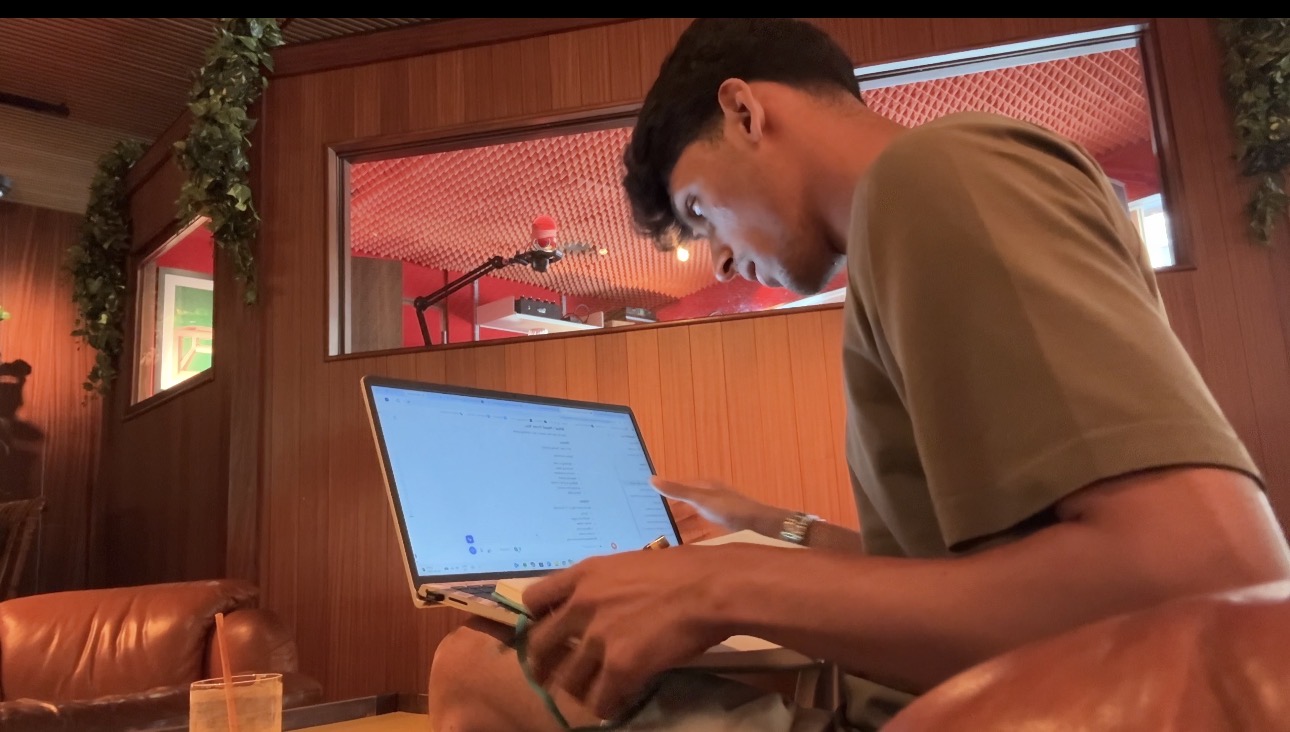
Random Ten starts from a familiar tension: being capable of many things but certain of none. Instead of asking people to declare a calling, it creates a structure for gathering evidence through action.
Random Ten is currently being built and tested.
Experience before identity
You do not need to call yourself something before you are allowed to try it.
Evidence before certainty
Small real encounters are more useful than perfect imaginary plans.
Direction before destination
A trustworthy next step matters more than a permanent answer.
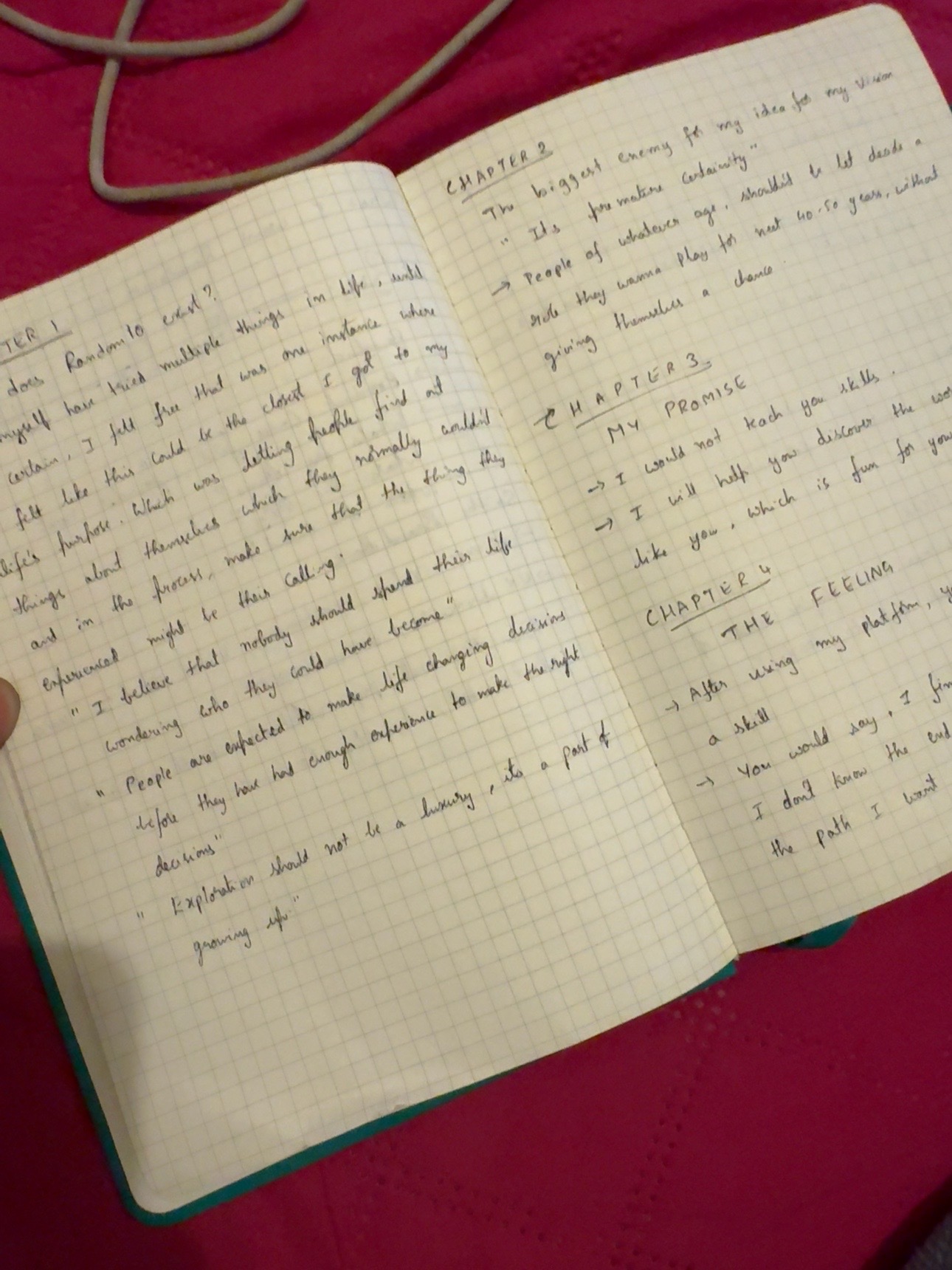


Journey so far
- Origin
A personal question becomes a testable method.
- Now
The homepage, skill framework and first participant pathway are being built.
- Next
Test small experiences, listen carefully and publish what is learned.
When I think I can,
I will.
A personal question becomes a shared experiment.
Community, proposed honestly
Discovery should
not happen alone.
The internet can
introduce a skill.
Real people
make it come alive.
The proposed community model connects online discovery with careful real-world practice and shared reflection.
London-first testing strategy: currently exploring small, responsible formats. No public events, experts or venues are confirmed.
- 01
Discover online
Meet a skill, its first experiment and the signals worth noticing.
- 02
Meet the expert
Proposed format: hear how a real practitioner thinks, works and began.
- 03
Try it in person
Example session format: a safe, bounded introduction with suitable supervision.
- 04
Reflect together
Proposed format: reflection circles, showcases and shared next steps.
Community mediaNot yet live
Currently exploring
Expert sessions, skill meetups, reflection circles and showcases.
A future volunteer pathway may help people host and support experiments. It is not yet open.
Currently building
The digital discovery framework and first participant pathway.
Proposed format
Expert introductions, bounded practice and group reflection.
Not yet live
Public events, a volunteer pathway, venues and regular programming.
Long-term vision
A credible bridge between online discovery and real-world practice.
Interest becomes participation—carefully and honestly.
Two ways to begin
Follow the build.
Or join the experiment.
Join the founding waitlist
Free. Receive significant project updates and hear when the first participant opportunities become available.
- Name, email and optional city only
- No payment required
- Leave whenever you choose
02 — Join the experiment
Apply to become a Founding Explorer
Random 10 is now inviting its first 100 explorers to test the method in the real world.
If selected, you'll complete at least one unfamiliar experiment, reflect on what happened and help shape the system while it is still being built.
Free to join during this testing phase. No outcome or career change is guaranteed.
Apply to the Founding 100What the founding cohort is not
Not a finished programme. Not a certification. Not a guaranteed career outcome.
Future-facing roadmap
Applications, pricing and the detailed cohort format will only be published after the homepage and waitlist experience are stable and the testing plan is ready.
No perfect promise. Just an honest next step.
Begin with evidence
You do not need
the perfect answer.
You need
the courage to begin
and the evidence
to continue.
When I think I can, I will.